Owning an electric vehicle changes one important household routine: where and how the vehicle gets its energy. Professional EV Charger Installation Services give homeowners a dedicated charging setup designed around the vehicle, available electrical capacity, parking location, and normal driving habits. A good installation should make charging convenient without placing unnecessary demand on an electrical system that was never evaluated for the added load.
Some drivers only need modest overnight charging. Others commute long distances and want faster recovery between trips. That difference matters when choosing charger type, circuit size, and installation location.
Blackbelt AC & Electrical provides electrical services across the San Antonio area, including home EV charger setup and electrical system upgrades. Its EV charger service includes site evaluation, wiring, connection, and testing.
Before buying charging equipment, homeowners should understand their driving routine and their home’s electrical limits. The best setup is not automatically the fastest charger available. It is the charger that fits the vehicle, property, and electrical system correctly.
Start With the Way You Actually Drive
EV charging decisions become easier when homeowners begin with daily mileage instead of equipment specifications. A driver who travels 20 miles each day has different charging needs from someone regularly covering 100 miles.
That difference can affect how much charging speed is genuinely useful.
Let Driving Habits Guide Charger Selection
A homeowner should think about when the vehicle arrives home, how long it normally stays parked, and how much battery capacity must be restored before the next trip.
For many drivers, overnight charging provides a long window. Therefore, the charger does not always need to deliver the highest possible output.
Level 2 home charging is commonly considered when homeowners want faster charging than a basic household outlet can provide. However, the vehicle itself also has an onboard charging limit, so installing more charger capacity does not always reduce charging time.
Multiple-EV households deserve additional planning. Two vehicles may need independent chargers, shared charging, or scheduled charging depending on panel capacity and driving routines.
Start with real use. Charger selection becomes much more practical once the household knows how much energy it normally needs each night.
Check Electrical Capacity Before Buying Equipment
An EV charger can become one of the larger continuous electrical loads in a home. That makes the existing electrical panel an important part of the installation conversation.
Buying a charger first and checking capacity afterward can create unnecessary complications.
Make the Electrical System Part of the Decision
Professional EV Charger Installation Services should include a review of the electrical system before final connection.
An electrician may need to consider the main service size, existing household loads, available breaker space, wiring route, and charger specifications.
An EV charger electrical circuit must be sized for the equipment and installed according to applicable electrical requirements. The breaker, conductor size, grounding, and connection method all need to work together.
Blackbelt AC & Electrical states that its EV charger installations include checking circuits, grounding, breaker connections, and panel capacity.
If the panel already operates close to its available capacity, the project may require a different charging strategy or electrical improvements. However, not every EV charger installation automatically requires a panel replacement.
The right answer comes from evaluating the actual home rather than assuming every property needs the same upgrade.
Put the Charger Where Daily Use Feels Natural
Charger location affects convenience every single day. A unit installed far from the vehicle’s charging port may technically work, yet require awkward cable routing across the garage.
That inconvenience becomes noticeable quickly.
Think About Parking Before Choosing the Wall
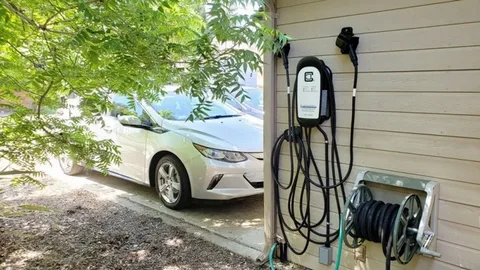
Professional home EV charging installation in Helotes, TX should consider how the vehicle normally parks, where its charge port is located, and how the cable will reach it.
A practical charger location should allow the cable to connect without creating a regular trip hazard or forcing homeowners to stretch it tightly.
Garage layouts can complicate placement. Storage cabinets, water heaters, doors, and work areas may occupy the most obvious wall space. Outdoor parking introduces different considerations, including equipment ratings and exposure.
Homeowners should also think ahead. If another EV may be added later, placing the first charger carefully could make future charging easier.
The shortest electrical route is useful, but it should not be the only factor. The best location balances installation practicality with everyday convenience.
Understand Hardwired and Plug-In Charging Options
Home EV chargers are commonly available in hardwired and plug-in configurations. Both can work well when properly installed, but they create different installation and usage considerations.
Homeowners should choose based on the equipment, charging requirements, and electrical setup rather than assuming one method is always better.
Compare the Connection Method, Not Just the Charger
A plug-in charger connects through a compatible receptacle. This can make equipment replacement more flexible in some situations.
A hardwired charger connects directly to the electrical circuit. Depending on the charger and desired output, hardwiring may be appropriate or required.
Reliable EV Charger Installation Services should follow the manufacturer’s installation requirements and the electrical conditions at the property.
Homeowners should also check whether their selected charger supports the vehicle connector they need. Adapter availability continues to evolve, but relying on unnecessary adapters can make a simple home setup more complicated.
Blackbelt AC & Electrical installs both hardwired and plug-in charging systems and describes its work as tailored to the vehicle’s power requirements.
The final decision should make charging easy while keeping the electrical installation straightforward and appropriate for the equipment.
Plan for Faster Charging Without Oversizing the System
Faster charging can sound automatically better, but residential charging should be balanced with the home’s electrical capacity and the driver’s actual needs.
A charger that can deliver more power than the vehicle accepts provides little practical benefit.
Match Charging Output to Vehicle Capability
Before selecting charging speed, homeowners should check the vehicle manufacturer’s AC charging specifications. That figure helps show how much power the vehicle can actually accept from a home charger.
A dedicated EV charging circuit may support different charger outputs depending on circuit capacity and equipment requirements.
Consider a homeowner whose vehicle spends ten hours in the garage every night. That driver may have plenty of time to restore normal daily mileage without using the charger’s maximum available power.
In contrast, a household with long commutes, irregular schedules, or multiple EVs may benefit more from higher charging capacity.
This is where electrical planning and driving habits meet. The goal is not maximum amperage. The goal is enough charging performance to make the vehicle ready when the homeowner needs it.
A balanced system can reduce unnecessary electrical upgrades while still providing dependable everyday charging.
Prepare the Home for Future EV Needs
Many households buying one EV today may eventually add another electric vehicle. Others may upgrade to vehicles with larger batteries or different charging characteristics.
A little future planning can make later changes easier.
Leave Practical Options Without Overbuilding
Professional EV charging circuit installation in La Vernia, TX can be considered alongside the home’s current electrical condition and realistic future needs.
Homeowners may want to think about panel space, conduit routes, garage configuration, and a possible second charging location.
That does not mean installing twice as much equipment immediately. Instead, some homeowners may benefit from choosing a location or electrical pathway that does not create unnecessary obstacles later.
Expert EV Charger Installation Services should also account for other planned electrical additions. New HVAC equipment, workshops, appliances, or home renovations may compete for available capacity.
Blackbelt AC & Electrical provides broader electrical installation and panel services in addition to EV charging, which allows charger planning to be considered within the home’s larger electrical system.
Future-ready planning is useful when it stays realistic rather than adding capacity that the household is unlikely to use.
Conclusion
Home EV charging works best when it becomes an ordinary part of the driver’s routine. The charger should be easy to reach, capable of restoring the energy needed between trips, and properly matched to the home’s electrical system.
Trusted EV Charger Installation Services begin with questions about the vehicle and property rather than simply choosing charger output. Daily mileage, overnight parking time, panel capacity, circuit requirements, charger location, and connection type all influence the right setup.
Homeowners in Helotes and La Vernia should also think about future electrical needs. A second EV, larger vehicle, or another major electrical addition could affect available capacity later. Reasonable planning now can make those changes easier to manage.
However, homeowners should avoid assuming that EV ownership automatically means replacing the electrical panel. Some systems already have suitable capacity, while others may require upgrades after a professional load evaluation.
Good charger placement matters just as much as electrical sizing. A cable that reaches the vehicle naturally can make daily charging much easier.
Working with Blackbelt AC & Electrical allows homeowners to approach EV charging as part of the complete electrical system. When charging habits, equipment, wiring, and available capacity are planned together, home charging can become a convenient and dependable part of EV ownership.
FAQ’s
What type of charger is commonly used for home EV charging?
Many homeowners choose Level 2 charging because it can provide faster residential charging than a standard household outlet.
Does every EV charger need its own circuit?
Many Level 2 installations use a dedicated circuit. The exact electrical requirements depend on the charger and manufacturer specifications.
Will installing an EV charger require an electrical panel upgrade?
Not always. An electrician should evaluate available capacity, existing loads, and the selected charger’s requirements before recommending an upgrade.
Where should a home EV charger be installed?
A practical location is close to the normal parking position, provides convenient cable reach, and allows an appropriate electrical connection.
Should I choose the highest-powered charger available?
Not necessarily. Charging capacity should match the vehicle’s onboard charging limit, household driving needs, and available electrical capacity.


