

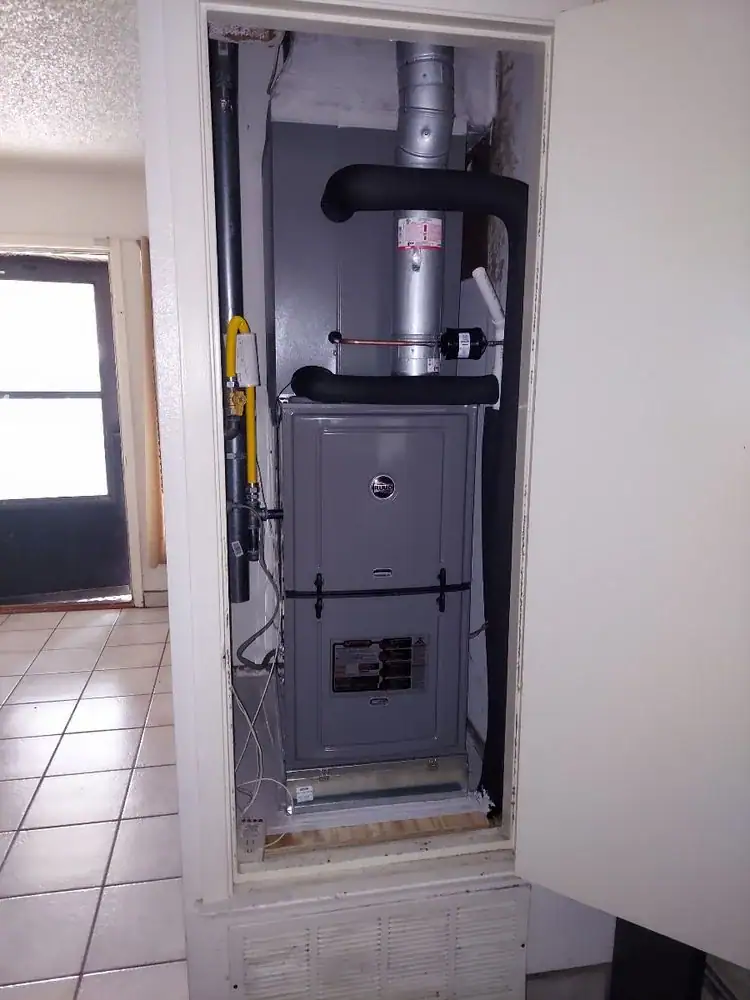
Stay warm this winter with heating system installation Bexar County, TX. Learn costs, heat pump vs gas, and how to avoid getting overcharged.
Your furnace has been running all night and the house still feels cold. You check the thermostat, it reads 68 degrees, but the air coming from the vents is lukewarm at best. Maybe the pilot light keeps going out, or the blower motor is making a noise that keeps you awake. Whatever the symptom, you are facing the same decision that every Bexar County homeowner faces at some point: call for heating system installation Bexar County, TX now, or wait and hope it gets better on its own. Blackbelt AC Heating and Electric has been working on heating systems across the San Antonio metro for years, and the truth is that waiting almost always makes the repair more expensive.
What Heating System Installation Actually Covers in Bexar County
Heating system installation addresses the replacement or new installation of the mechanical, electrical, and airflow systems that deliver safe, efficient warmth to your home. In Bexar County, this work is complicated by the mix of housing ages and heating system types that create a wide range of installation scenarios. Many homes built in the 1990s and early 2000s have gas furnaces paired with central air conditioning, while newer construction and recent replacements increasingly use heat pumps. Some older ranch-style properties still rely on electric resistance heating or wall-mounted units. Each system has its own installation requirements, fuel connections, and cost profiles.
In Bexar County, we have noticed that most homeowners cannot tell whether they have a heat pump or a gas furnace, let alone which fuel source it uses. This matters because the installation approach is completely different. A gas furnace involves a combustion chamber, heat exchanger, ignitor or pilot assembly, gas valve, and flue venting. Common installation considerations include proper gas line sizing, combustion air supply, flue venting through the roof or sidewall, and carbon monoxide safety testing. Heat pumps, by contrast, use a refrigeration cycle to move heat from outdoor air into your home. They rely on a reversing valve, defrost controls, outdoor coils, and auxiliary electric heat strips. Installation requires proper refrigerant line sizing, electrical supply sizing, and outdoor unit placement for adequate airflow.
For residential heating system installation Bexar County, TX, the process includes a load calculation to determine the correct system size, permit application through the city or county, removal of the old equipment, installation of the new system, ductwork modifications if needed, electrical or gas connections, thermostat programming, and final inspection. Bexar County follows the International Building Codes with local amendments, and all HVAC work requires permits and inspections to ensure safety and code compliance.
The Real Challenge Bexar County Homeowners Face
The hardest truth about heating in Bexar County is that the climate tricks people into neglecting their systems. Summers are brutal and long, so homeowners focus entirely on air conditioning maintenance. By the time the first cold front arrives in November or December, the furnace has sat idle for seven months and problems that developed during the cooling season go unnoticed until they become emergencies. Then a freeze hits, every HVAC company in the San Antonio metro is overwhelmed with calls, and you are either paying emergency rates or shivering for days waiting for an appointment.
A client in Bexar County reached out when they noticed their heat pump was blowing cold air during a January cold snap that dropped temperatures into the low 20s. The auxiliary heat strips had failed months earlier, but the system had managed to keep the house warm during mild fall weather using the heat pump alone. When the temperature fell below the heat pump’s effective operating range, around 30 to 35 degrees, the backup heat was not there to compensate. The family woke up to a 52-degree house and a system that could not catch up. The repair required replacing the heat strip sequencer and two burned-out heating elements, a job that would have cost half as much if caught during a fall maintenance visit.
Here is the objection most competitors ignore: what happens when the installation does not actually fix the problem? Many HVAC companies in the San Antonio area operate on a parts-replacement model. The technician swaps out a component, collects the diagnostic and repair fee, and moves to the next call. If the root cause was something else, like an undersized duct system causing excessive static pressure that burned out the blower motor, you will be replacing that motor again in two years. The question competitors avoid is whether they guarantee their diagnosis. Most will not put that in writing because they are guessing based on the most common failure for your system type, not diagnosing your specific home.
How Blackbelt AC Heating and Electric Approaches Heating Installation Differently
Most HVAC companies send technicians who are trained to identify failed parts and replace them. Blackbelt AC Heating and Electric sends technicians who are trained to understand your entire heating system as an integrated unit, including the ductwork, thermostat, electrical supply, and the thermal envelope of your home. This means we test static pressure across the evaporator coil, measure temperature rise across the heat exchanger, and verify that your return air pathways are not restricted by dirty filters or blocked vents before we declare an installation complete.
What sets this apart in Bexar County specifically is our familiarity with the local housing stock and the unique stress that South Texas weather puts on heating equipment. Homes in neighborhoods like Helotes, Grey Forest, and The Ridge sit on rocky, caliche-rich soil that creates foundation movement. That movement cracks ductwork, separates flue pipes, and shifts gas line connections in ways that cause intermittent failures no standard parts replacement will fix. We also know that many Bexar County homes have converted garages, additions, or sunrooms that were never properly integrated into the original HVAC design, creating zones that overwork the system and cause premature component failure.
For affordable heating system installation Bexar County, TX, we offer transparent pricing with detailed written estimates that break down equipment costs, labor, permits, and any necessary modifications. We do not pad bills with unnecessary upsells or hidden fees. Our goal is to install the right system for your home and budget, not the most expensive option that fits our commission structure.
Here is the insight generic articles never mention: the efficiency rating on your furnace or heat pump sticker means almost nothing if your duct system is leaking. A 95 percent efficient gas furnace delivering heated air through ducts with 25 percent leakage is effectively operating at 71 percent efficiency, and you are paying for the difference every month. Most HVAC contractors will not bring this up because duct sealing and modification work is less profitable than equipment replacement, and it requires more diagnostic skill than simply swapping a part. We measure duct leakage during every heating service call and show you the actual numbers, so you can decide whether to fix the real problem or keep replacing symptoms.
Practical Tips: What to Know Before You Decide
Start every heating season with a filter change, even if the filter looks clean. Restricted airflow is the single most common cause of furnace and heat pump failure, and it is also the most preventable. Use the filter rating recommended by your equipment manufacturer, not the highest MERV rating you can find. Dense filters catch more particles but also restrict airflow, which increases static pressure, strains the blower motor, and can cause the heat exchanger to overheat and crack.
Working with clients in Bexar County, our team found that roughly half of homeowners set their thermostat to “emergency heat” when they feel the system is not keeping up. On a heat pump system, this bypasses the heat pump entirely and runs only the expensive electric resistance strips, which can triple your heating bill for no improvement in comfort. The correct setting is “heat,” which allows the heat pump to do its job and only calls on auxiliary heat when outdoor temperatures drop below the system’s effective range. If your heat pump cannot keep up in mild weather, the problem is likely low refrigerant, a dirty outdoor coil, or a failed reversing valve, not a need for emergency heat.
Second, understand the difference between a repair and a replacement recommendation. A good rule of thumb is the 5,000 rule: multiply the age of your system by the estimated repair cost. If the result exceeds $5,000, replacement is usually the smarter financial decision. For example, a 12-year-old furnace with a $600 repair estimate scores 7,200, which points toward replacement. A 5-year-old heat pump with a $400 repair scores 2,000, which clearly favors repair. This is not a hard rule, but it gives you a framework for evaluating recommendations that may be influenced by commission structures.
One local market-specific tip: Bexar County sits at a higher elevation than downtown San Antonio, which means winter nights are consistently 3 to 5 degrees colder. That small difference pushes more heating hours onto auxiliary electric strips in heat pump systems and increases the thermal load on gas furnaces. If you are on the fence about upgrading from a heat pump to a dual-fuel system that pairs a heat pump with a gas furnace, the elevation factor in Bexar County makes the upgrade more financially sensible than it would be closer to sea level. The gas furnace handles the coldest nights efficiently while the heat pump manages milder weather, reducing your reliance on expensive resistance heating.
For professional heating system installation Bexar County, TX, look for contractors who perform load calculations, test ductwork, and explain their recommendations in plain language. The lowest bid is rarely the best value if it means skipping critical diagnostics or installing undersized equipment.
Why Proper Assessment Matters More Than the Fastest Installation
A heating system is not a collection of replaceable parts. It is an integrated machine that depends on proper airflow, correct fuel delivery, accurate control signals, and a well-designed distribution network to do its job safely and efficiently. Replacing a part without understanding why it failed is like taking aspirin for chest pain, it might feel better for a while, but the underlying problem is still there. heating system installation Blackbelt AC Heating and Electric has built its reputation in Bexar County on doing the diagnostic work that other companies skip, so installations last and homeowners stop calling for the same problem year after year. If your heater is not performing the way it should, the next step is a thorough system evaluation that looks at the whole picture, not just the part that failed today.
FAQs
How much does heating system installation cost in Bexar County?
Most heating system installations in the Bexar County area range from $4,500 to $10,000 depending on the system type and home size. Gas furnaces typically cost $3,500 to $7,500 installed. Heat pumps run $5,500 to $10,000. Dual-fuel systems range from $6,000 to $10,000. Emergency after-hours calls typically add $100 to $200 to the base rate.
Should I install a heat pump or gas furnace in Bexar County?
If your home has existing gas service and you are only replacing the furnace, a high-efficiency gas furnace is usually the most cost-effective choice. If you are replacing both your AC and heating system, a heat pump is worth considering because it handles both functions. For homes at higher elevations in Bexar County, a dual-fuel system that pairs a heat pump with a gas furnace backup offers the best efficiency and comfort.
Do I need a permit to install a new heating system in Bexar County?
Yes, Bexar County requires permits for all new HVAC system installations, including heating equipment. The permit ensures compliance with the International Building Code and local amendments. Unpermitted work can void your homeowner’s insurance, create code violations, and result in fines. A licensed contractor should handle all permitting and inspections.
Why does my heat pump blow cold air sometimes?
Heat pumps naturally deliver air at lower temperatures than gas furnaces, usually 90 to 100 degrees versus 120 to 140 degrees. During defrost cycles, the system temporarily blows cooler air. If cold air persists outside of defrost mode, the issue could be low refrigerant, a failed reversing valve, or auxiliary heat strips that are not engaging when outdoor temperatures drop below 30 to 35 degrees.
How do I know if an HVAC contractor is legitimate?
Verify that the contractor holds a Texas Air Conditioning and Refrigeration Contractor license, carries general liability and workers compensation insurance, and can provide local references from recent jobs in Bexar County or the San Antonio area. Avoid companies that quote prices over the phone without seeing your system, pressure you to decide immediately, or cannot explain their diagnostic findings in plain language.


