Need air conditioning installation in Schertz TX? Learn about AC types, costs, what installation involves, and how to find a trusted local HVAC contractor.
A new air conditioning system is one of the most significant investments a Texas homeowner makes. In Schertz and the surrounding area, where summer temperatures regularly push above 100°F and the AC runs for six or more months out of the year, getting the right system installed correctly isn’t just about comfort — it’s about how much you pay to run that system every single month for the next decade or more.
The problem is that most homeowners only replace their AC when the old one has already failed, which means they’re making a major purchasing decision under pressure, in the heat, with a sense of urgency that makes it harder to ask good questions and shop carefully. By the time most families call for a replacement, they want it done today — not next week.
This guide is for Schertz homeowners who want to understand AC installation before they’re in that situation. And if you’re already in it right now, the information here still applies. At Blackbelt AC Heating and Electric, we install air conditioning systems for Schertz area homes regularly, and we want every homeowner to walk into this decision with real knowledge rather than just trusting the first quote they get.

Why AC Installation in Schertz TX Requires More Thought Than Most People Give It
Schertz sits in Guadalupe County just northeast of San Antonio, and the climate here is as demanding on HVAC systems as anywhere in Texas. Summer heat arrives in May and stays through October. High humidity during spring and early summer creates cooling loads that go beyond just temperature — an AC system here has to move both heat and moisture out of a home to keep it genuinely comfortable.
An AC system that’s sized wrong for the home it’s cooling is one of the most common and most expensive mistakes in residential HVAC. A system that’s too small runs constantly without reaching the set temperature, wears out prematurely, and drives up electricity bills. A system that’s too large — which is more common than most homeowners realize — short-cycles. It turns on, cools the air temperature quickly without removing enough humidity, and then shuts off. The result is a house that feels cool but clammy, with higher humidity levels than a properly sized system would deliver.
According to the U.S. Department of Energy, an oversized air conditioner can cause excess humidity problems, temperature swings, and up to 30% higher energy usage than a correctly sized system operating in the same home. For Schertz homeowners, that efficiency gap represents hundreds of dollars in electricity costs every cooling season.
Proper sizing requires a Manual J load calculation — a formal engineering process that factors in the home’s square footage, ceiling height, insulation levels, window area and orientation, local climate data, and internal heat generation from appliances and occupants. A contractor who sizes your system based only on square footage is not doing this properly.
Types of Air Conditioning Systems Used in Schertz Homes
Understanding the main system types helps you have a more informed conversation with any contractor and make sure you’re getting a recommendation that fits your home rather than just whatever the contractor has in stock.
Central split systems are the most common configuration for Schertz homes. An outdoor condenser unit sits outside the home and connects to an air handler or furnace inside. Refrigerant circulates between the two units. Cooled air is distributed through the home’s existing duct system. This is the standard setup for most residential AC replacements.
Heat pump systems work like central split systems but can also provide heating by reversing the refrigerant cycle. In Schertz’s climate — where winters are mild but heating is needed for a few months — a heat pump can handle both heating and cooling efficiently, eliminating the need for a separate gas furnace in some homes.
Ductless mini-split systems use an outdoor unit connected to one or more indoor wall-mounted air handlers without ductwork. They’re ideal for room additions, detached garages, and situations where extending the existing duct system isn’t practical. They’re also more energy efficient than systems that lose conditioned air through duct leakage.
Packaged systems combine all the components — compressor, condenser, and air handler — in a single outdoor unit, with air distributed through the home’s ductwork. These are less common in residential applications but are found in some older Schertz homes and in homes where interior space for an air handler is limited.
High-efficiency systems rated at 16 SEER2 or above use more advanced compressor technology to move more cooling per unit of electricity. The upfront cost is higher than a standard efficiency system, but the operating cost savings over the system’s lifespan often justify the difference — particularly for Schertz homes where the AC runs heavily for many months each year.
What a Professional AC Installation Actually Covers
Many homeowners think AC installation means connecting the new unit and turning it on. A proper installation is significantly more involved, and the steps that are often skipped are the ones that determine whether the system performs well for 15 years or starts causing problems in the first few seasons.
Duct system assessment should happen before any equipment is selected. The ducts that carry cooled air throughout the home need to be the right size for the new system, properly sealed to minimize leakage, and in adequate condition to deliver air efficiently. Installing a high-efficiency system on a leaky, undersized duct system wastes a significant portion of the efficiency you paid for. A professional installation includes at minimum a visual duct assessment and ideally a duct leakage test.
Manual J load calculation determines the correct system capacity for the home. This isn’t optional — it’s the basis for selecting equipment that will actually work correctly for your specific home.
Equipment selection follows from the load calculation. The system capacity, the efficiency rating, and the specific equipment brand and model all affect both the upfront cost and the long-term operating cost. A good contractor presents options at different price points and explains the trade-offs rather than just recommending the most expensive system or the one with the highest margin.
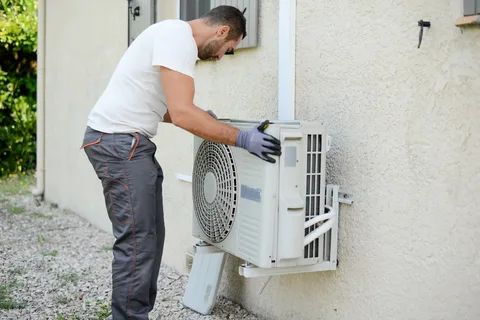
The physical installation involves setting the outdoor unit on a level pad, mounting or positioning the indoor air handler, connecting refrigerant lines, making electrical connections, connecting the condensate drain, and verifying that the system is charged to manufacturer specifications. Refrigerant charge is one of the most commonly neglected installation steps — a system that’s even slightly undercharged operates less efficiently and wears components faster.
Start-up and commissioning tests the completed installation — checking airflow at supply registers, verifying refrigerant pressures, testing the thermostat, and confirming that the system is operating within manufacturer specifications before the installer leaves.
AC Installation Costs in Schertz TX
Knowing realistic cost ranges helps you evaluate proposals fairly and recognize when something is priced too low to include everything that needs to happen.
| System Type | Typical Installed Cost | SEER2 Range | Best For |
| Standard central split (2–3 ton) | $3,500 – $6,500 | 14–16 SEER2 | Standard residential replacement |
| High-efficiency split (2–3 ton) | $5,500 – $9,500 | 17–20+ SEER2 | Lower long-term operating cost |
| Heat pump system (2–3 ton) | $4,500 – $8,500 | 15–20 SEER2 | Heating and cooling in one system |
| Ductless mini-split (single zone) | $3,000 – $6,000 | 18–25 SEER2 | Room additions, no ductwork spaces |
| Ductless multi-zone system | $6,000 – $14,000 | 18–22 SEER2 | Multiple rooms without central ducts |
Homeowners looking for best air conditioning services in Schertz TX should get written estimates that separate equipment cost, installation labor, and any duct work or electrical upgrades needed so they can compare proposals accurately.
How to Choose the Right AC System for Your Schertz Home
Choosing between system types and efficiency levels is easier once you know what factors matter most for your situation.
If your home has existing ductwork in good condition, a central split system replacement is almost always the right starting point. The question then becomes what efficiency level makes sense financially. A rough calculation: compare the cost difference between a standard and high-efficiency system against the annual electricity savings the higher-efficiency system would produce. In Schertz’s climate with heavy cooling loads, high-efficiency systems often pay back the premium in three to five years through lower electricity bills.
Air conditioning installation in Schertz TX on homes with older ductwork requires assessing whether the duct system should be repaired or partially replaced alongside the new equipment. A new high-efficiency system installed on a leaky duct system never reaches its rated efficiency in real-world operation — the duct work needs to support the equipment investment.
If you’re adding a room, finishing a garage, or have a space that the central system doesn’t reach well, a ductless mini-split is worth serious consideration. The efficiency ratings on modern mini-splits are among the highest available in residential HVAC, and the ability to control temperatures in individual zones independently provides both comfort and energy savings that centralized systems can’t match.
For homes that currently use electric resistance heating — either baseboard heaters or an electric furnace — switching to a heat pump system provides both the cooling function and significantly more efficient heating than resistance elements. The efficiency advantage of a heat pump over electric resistance heating is substantial, particularly in Schertz’s mild winters where the heat pump operates efficiently for most of the heating season.
Permits and Inspections for AC Installation in Schertz TX
AC installation in Schertz requires a mechanical permit from the City of Schertz or Guadalupe County depending on the specific property location. Permitted installations receive an inspection that confirms the system meets code — verifying electrical connections, refrigerant handling, and installation standards. Unpermitted AC work can create problems when you sell the home and may affect warranty coverage on the equipment.
A contractor who suggests skipping permits to speed things up or reduce costs is not protecting your interests. Ask specifically whether permits are included in the proposal before signing anything.
Texas also requires HVAC technicians to hold an EPA Section 608 certification to handle refrigerants, and residential HVAC contractors must hold an appropriate state license. Verify license status through the Texas Department of Licensing and Regulation at tdlr.texas.gov before any work begins.
Closing Thoughts
A well-chosen, correctly installed air conditioning system in Schertz runs efficiently for 15 to 20 years, keeps your home genuinely comfortable through Texas summers, and doesn’t surprise you with repair calls in the first few seasons. Getting there requires proper sizing, equipment that matches your home’s needs, and an installation team that follows through on the details — from duct assessment to refrigerant charge to commissioning.
For any homeowner in Schertz who is planning an AC replacement or dealing with a failed system right now, the most important step is getting a written estimate from a licensed contractor who performs a Manual J calculation before recommending equipment — not just asks how many square feet your home is.
Blackbelt AC Heating and Electric serves Schertz and the surrounding Guadalupe and Bexar County area with professional AC installation, replacement, and service. Call us today for a free estimate and an honest assessment of what your home actually needs.
FAQs
How long does AC installation take in Schertz TX? A standard central split system replacement — removing the old equipment, installing the new outdoor and indoor units, and connecting everything — typically takes four to eight hours for an experienced two-person crew. More complex installations involving significant duct work, electrical panel upgrades, or refrigerant line modifications take longer. Ductless mini-split installations for a single zone generally take three to five hours. Multi-zone ductless systems may take a full day or more depending on the number of indoor units and the routing complexity. On the day of installation, plan for the AC to be out of service for the duration of the work. For Schertz homeowners scheduling in summer, morning appointments help minimize the discomfort during the installation window.
What size AC do I need for my Schertz TX home? AC sizing is determined by a Manual J load calculation — not by square footage alone. A 2,000 square foot home in Schertz with good insulation, newer windows, and north-facing shade might need a 3-ton system, while the same square footage with poor insulation, west-facing windows, and high ceilings might need a 4-ton system. The factors that affect the calculation include square footage, ceiling height, insulation levels in walls and attic, window area and orientation, local design temperatures, and the number of people occupying the home. Any contractor who sizes your system based only on square footage is not performing a proper load calculation. Ask specifically whether the contractor performs a Manual J before recommending equipment — and ask to see the results.
What SEER2 rating should I look for in a Schertz TX AC system? SEER2 is the efficiency rating for air conditioning systems as measured under the updated M1 test procedure implemented in 2023. Higher SEER2 ratings mean the system moves more cooling per unit of electricity consumed. The minimum SEER2 rating for new central AC systems in the South region of the US is currently 14.3 SEER2 as of 2023. Systems rated 16 SEER2 and above provide meaningful operating cost savings over the minimum, and in Schertz’s climate where the AC runs heavily for six or more months, the additional efficiency pays back the higher upfront cost in reduced electricity bills over the system’s lifespan. For homeowners who plan to stay in the home long-term, a 17 to 20 SEER2 system is worth the premium. For homeowners with a tighter budget or shorter planning horizon, a 14 to 16 SEER2 system provides solid performance at a lower upfront cost.
How do I know if my AC ducts need to be replaced when I install a new system? Several signs suggest that duct work needs attention alongside a new AC installation. Rooms that never seem to cool properly regardless of the thermostat setting often have undersized or disconnected duct runs. High humidity in some parts of the home while others are comfortable suggests duct leakage bringing unconditioned air into the system. Visible damage, disconnected sections, or significantly compressed flexible duct in the attic are obvious concerns. A duct leakage test — where the duct system is pressurized and the leakage rate is measured — gives a precise answer about duct performance rather than just visual guesswork. Most professional HVAC contractors can perform this test as part of an installation assessment. Addressing significant duct issues alongside a new system installation ensures that the new equipment operates at its rated efficiency rather than losing a significant portion of its output through leaky ducts.
What maintenance does a new AC system need in Schertz TX? Annual preventive maintenance is the most important thing you can do to protect a new AC investment in Texas. A professional tune-up each spring — before the heavy cooling season starts — includes checking refrigerant charge, cleaning the coils, inspecting electrical connections, lubricating moving parts, checking the condensate drain, and testing the system’s performance against manufacturer specifications. Monthly filter changes during the cooling season keep airflow clean and protect the system from the dust and debris that Texas conditions generate. Keeping the area around the outdoor unit clear of vegetation, debris, and grass clippings maintains proper airflow through the condenser. Addressing any unusual noises, performance changes, or signs of ice formation promptly — rather than waiting for a breakdown — extends the system’s life and prevents minor issues from becoming expensive repairs.


