

Filing an HVAC insurance claim in Boerne TX? Here’s what to expect from real claim assistance and how to avoid common pitfalls.
A storm rolls through the Texas Hill Country, knocks out power for a few hours, and when the lights come back on, your AC doesn’t. Or hail hammers the outdoor condenser unit during a spring thunderstorm and leaves it looking like a dented soda can. Or a lightning strike fries the compressor on a perfectly working system.
These things happen more often in Boerne than folks realize. And when they do, you’re suddenly trying to figure out two things at once — how to get your AC working again, and how to handle the insurance claim that should cover the damage. Most folks have never filed an HVAC claim before, and the process can feel confusing.
So today we want to walk through what to actually expect from professional HVAC insurance services. The steps involved, the paperwork, the timing, and how to know if the team you’re working with is doing the job right. If you’re dealing with HVAC damage now or want to know what to do when it happens, Blackbelt AC & Electrical has been helping Hill Country homeowners with HVAC repairs and insurance work for years.
Why HVAC Insurance Claims Are Their Own Thing
Quick context first. Filing an insurance claim for HVAC damage isn’t like filing for hail damage to your roof or water damage from a burst pipe. The systems are more complex, the diagnostics matter more, and the documentation requirements are different.
A real HVAC insurance service understands all of this. They know which kinds of damage are covered under standard homeowners policies. They know how to document the damage in ways adjusters accept. They know how to write estimates that don’t get pushed back during the claim review.
According to the Insurance Information Institute, weather-related damage to HVAC equipment accounts for a meaningful share of homeowners insurance claims each year, with hail, lightning, and wind being the top three causes. Have you ever wondered why some folks get their AC replaced through insurance smoothly while others fight for months? The difference usually comes down to who they hire to help.
What’s Usually Covered (And What’s Not)
Let’s clear this up first because it’s where most folks get confused. Standard homeowners insurance typically covers HVAC damage from:
- Lightning strikes and power surges from lightning
- Hail damage to outdoor units
- Wind-driven debris damage
- Fire damage
- Falling tree damage
- Vandalism
What’s usually not covered:
- Normal wear and tear
- Age-related breakdowns
- Lack of maintenance
- Manufacturer defects (usually covered by warranty instead)
- Damage from neglected issues that grew over time
The distinction matters because insurance adjusters look closely at the cause of damage. A 14-year-old AC that finally died on a hot summer day isn’t an insurance claim. A 3-year-old AC that got hit by hail last week is.
Step 1: Initial Damage Assessment
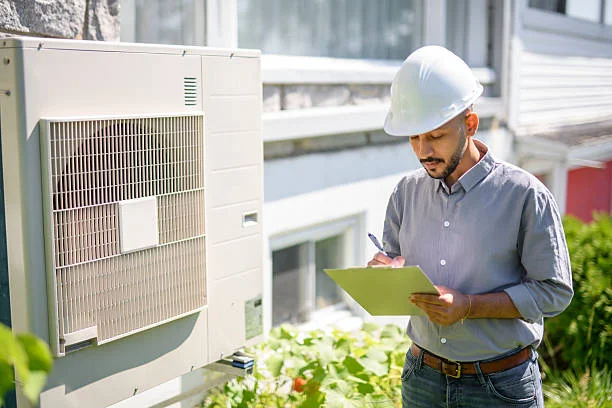
When you call an HVAC insurance service after a damage event, the first step is a real assessment. A technician comes out, looks at the equipment, and figures out what actually caused the failure.
This matters more than folks realize. Sometimes what looks like storm damage turns out to be age-related failure. Sometimes what looks like normal wear turns out to be hidden lightning damage. The proper diagnosis sets up everything else in the claim process.
A real assessment typically takes 30 to 60 minutes and includes:
- Visual inspection of the outdoor unit
- Indoor inspection of the air handler and ductwork
- Testing of components like the compressor, capacitor, and electrical board
- Documentation of damage with photos and notes
- Estimate of repair versus replacement costs
Step 2: Insurance-Friendly Documentation
This is where amateur work falls apart and pro work shines. Insurance companies have specific requirements for damage documentation, and a real HVAC insurance service knows them.
Proper documentation includes:
- Detailed photos of all damaged components
- Specific identification of what failed and why
- Repair versus replacement analysis with cost differences
- Manufacturer information for damaged equipment
- Age and condition assessment of the system before damage
- Written technician notes explaining the diagnosis
Without this kind of paperwork, insurance adjusters often deny claims or pay out at the lowest possible amount. With it, claims tend to move faster and pay more fairly.
Step 3: Working With Your Adjuster
Most homeowners try to handle adjuster interactions on their own. That’s usually a mistake. A real HVAC insurance service either communicates directly with the adjuster or coaches you through the conversations.
Adjusters ask specific questions — when did the damage happen, what caused it, what’s the age of the system, has it been properly maintained. The answers shape whether your claim gets approved and at what amount. Good HVAC service knows what kinds of answers adjusters need versus what kinds raise red flags.
A common scenario in Boerne after spring hailstorms — adjusters sometimes want to do a “scope of repair” instead of full replacement on damaged units. A real HVAC service can document why repair isn’t safe or cost-effective when the damage is severe enough.

What HVAC Insurance Services Actually Cost You
Here’s a question we hear a lot. Do these services charge you extra, or is the cost built into the claim?
| Service Type | Who Pays | Typical Cost Impact |
| Initial damage assessment | Insurance covers most | $0-150 out of pocket |
| Claim documentation | Built into repair quote | No separate fee |
| Adjuster coordination | Built into service | No separate fee |
| Actual repair or replacement | Insurance + deductible | Your deductible only |
| Code upgrades during install | Insurance covers some | $200-800 possible |
| Disposal of damaged unit | Built into install | No separate fee |
Most legitimate HVAC insurance services don’t charge separately for the insurance work side. Their pricing is built into the repair or replacement they perform after the claim approves. If a contractor wants to charge you separately for “claim assistance,” that’s worth questioning.
Step 4: Choosing Repair Versus Replacement
This is one of the bigger decisions in any HVAC insurance claim. Sometimes the damage is small enough to repair. Sometimes the only safe move is replacement. The answer affects the insurance payout and your long-term costs.
Factors that push toward replacement:
- Age of the system (typically 10+ years tips toward replacement)
- Cost of repair exceeding 50% of replacement value
- Repair involves components that aren’t fully covered
- System has had multiple recent failures
- Energy efficiency improvements available with new unit
Factors that favor repair:
- Newer system (under 7 years old)
- Single component damage with clean repair path
- Lower deductible making repair more cost-effective
- Insurance limits the payout to repair-only coverage
A real HVAC insurance service walks you through these factors honestly. The goal isn’t always to maximize the insurance claim — it’s to make the right long-term decision for your home and budget.
For Boerne homeowners who want a contractor that gives straight advice on insurance claim work, Professional HVAC Insurance Services in Boerne, TX is the type of local service that knows the Hill Country climate and the major insurance carriers operating in this region.
Step 5: Permits and Code Compliance
Here’s something most folks don’t think about until later. When you replace an HVAC system, current building codes apply — even if your old system was installed before the current codes existed.
That might mean adding a hard-wired electrical disconnect at the outdoor unit, upgrading the refrigerant lines, installing a new condensate pump or float switch, or adding a surge protector at the panel. These code upgrades aren’t always fully covered by insurance, which leads to surprise out-of-pocket costs.
A real HVAC insurance service identifies code-required upgrades upfront, includes them in the initial estimate, and works with the adjuster to get as much covered as possible. They don’t surprise you with $1,200 in code upgrades after the install is already underway.
Step 6: The Repair or Replacement Work
Once the claim approves and scope is finalized, the actual work happens. For a typical HVAC replacement after insurance approval, plan on:
- 1 to 2 days for installation
- Full system commissioning and testing
- New thermostat setup if included
- Walkthrough showing system operation
- Warranty paperwork transfer
- Final invoice submitted to insurance company
Most insurance companies pay the contractor directly for approved claims, with you responsible only for your deductible amount. Some require you to pay upfront and submit for reimbursement. A real HVAC insurance service explains which arrangement applies before any work happens.
A Boerne Story Worth Sharing
A family near Tapatio Springs reached out to us last spring after a major hailstorm. Their 4-year-old AC unit had visible damage — bent fins, dented housing, and the unit wasn’t cooling properly anymore.
They’d already gotten an estimate from another contractor who told them the unit could be “straightened out” for $1,800. The other contractor hadn’t even contacted the insurance company.
We did a proper assessment and found that the hail damage had also affected the coil and compressor mounting. Repair wasn’t realistic. We documented the damage with detailed photos and a technician report, submitted everything to their carrier, and worked through the adjuster review.
The claim approved for full replacement at $8,400. The family paid their $1,000 deductible and got a brand new, higher-efficiency unit installed. The “straighten out and repair” approach would have cost them $1,800 plus another claim or replacement within 2 to 3 years when the damaged components failed properly.
What to Watch For
Some red flags during HVAC insurance work:
- Contractor wants full payment upfront before insurance approves
- No documentation given to you of the assessment
- Suspicious pressure to file a claim when damage seems minor
- “Free upgrades” that aren’t actually code-required
- Cash-only deals or refusal to work with insurance directly
The Federal Trade Commission has tracked HVAC-related insurance fraud as a growing concern, particularly after major storm events when out-of-area “storm chasers” arrive looking for quick claim work. A real local Boerne HVAC service has a track record you can verify and isn’t going anywhere after the job.
Wrapping It Up
Filing an HVAC insurance claim in Boerne doesn’t have to be a nightmare. With the right HVAC service handling the diagnostic, documentation, and adjuster work, claims tend to move smoothly and pay fairly. Watch for the warning signs of poor service or fraud. Choose a contractor with real local presence and experience working with the carriers in this region. For homeowners ready to start a claim or just wanting to know who to call when damage happens, the Best HVAC Insurance Claim Assistance in Boerne, TX team is a strong place to begin the conversation.
FAQs
How long does an HVAC insurance claim usually take to process?
For most claims in the Boerne area, plan on 7 to 21 days from initial filing to approval. Simple claims with clear damage move faster. Complex claims involving multiple components or disputed coverage can stretch to 30 to 60 days. The speed depends heavily on how well-documented the initial claim is, which is where working with an experienced HVAC service makes a real difference.
Will my insurance rates go up if I file an HVAC claim?
Filing a single weather-related claim usually doesn’t trigger a major rate increase, though some carriers do consider claim history at renewal time. Multiple claims within a few years can affect rates more noticeably. The deductible savings and replacement value of legitimate claims almost always outweigh small potential rate increases. Talk with your insurance agent if you’re unsure about your specific policy.
Does insurance cover the deductible on my HVAC claim?
No, the deductible is your out-of-pocket responsibility. For most Boerne homeowners, HVAC-related deductibles run between $500 and $2,500 depending on policy specifics. Some policies have separate deductibles for wind/hail damage versus other types. Check your policy declarations page before assuming any number.
Can I choose any HVAC contractor for insurance work, or does my carrier pick?
You have the right to choose your own HVAC contractor in Texas. Insurance carriers may suggest preferred vendors from their lists, but you’re not required to use them. Many homeowners find better results working with established local contractors who know the area and the specific insurance companies operating there.
What happens if my insurance denies the HVAC claim?
Denials happen sometimes. Common reasons include insufficient documentation, damage attributed to wear and tear rather than a covered event, or policy exclusions. A good HVAC service helps you appeal denials with additional documentation, expert reports, or supplemental evidence. Many initial denials get overturned when properly contested. Don’t accept the first “no” without exploring options.
How long does an HVAC insurance claim usually take to process?
For most claims in the Boerne area, plan on 7 to 21 days from initial filing to approval. Simple claims with clear damage move faster. Complex claims involving multiple components or disputed coverage can stretch to 30 to 60 days. The speed depends heavily on how well-documented the initial claim is, which is where working with an experienced HVAC service makes a real difference.
Will my insurance rates go up if I file an HVAC claim?
Filing a single weather-related claim usually doesn’t trigger a major rate increase, though some carriers do consider claim history at renewal time. Multiple claims within a few years can affect rates more noticeably. The deductible savings and replacement value of legitimate claims almost always outweigh small potential rate increases. Talk with your insurance agent if you’re unsure about your specific policy.
Does insurance cover the deductible on my HVAC claim?
No, the deductible is your out-of-pocket responsibility. For most Boerne homeowners, HVAC-related deductibles run between $500 and $2,500 depending on policy specifics. Some policies have separate deductibles for wind/hail damage versus other types. Check your policy declarations page before assuming any number.
Can I choose any HVAC contractor for insurance work, or does my carrier pick?
You have the right to choose your own HVAC contractor in Texas. Insurance carriers may suggest preferred vendors from their lists, but you’re not required to use them. Many homeowners find better results working with established local contractors who know the area and the specific insurance companies operating there.
What happens if my insurance denies the HVAC claim?
Denials happen sometimes. Common reasons include insufficient documentation, damage attributed to wear and tear rather than a covered event, or policy exclusions. A good HVAC service helps you appeal denials with additional documentation, expert reports, or supplemental evidence. Many initial denials get overturned when properly contested. Don’t accept the first “no” without exploring options.


